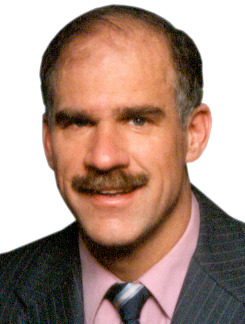
Robert Meyer


In 2004, one of the top atheist philosophers of the 20th century, Anthony Flew, announced that he found sufficient evidence to believe in God. Rather than examine the evidence that led to his conversion, his contemporaries suggested he was a senile old man that was beguiled by devious Christian apologists. So much for open-mindedness and critical thinking.
A second issue I have is how atheists handle the question of origins. Here the atheist pleads agnostic and says he doesn’t know. At the same time, he says that creation is a fairy tale. If one truly does not know, how can he also know that what the Bible states about creation is false? The atheist articulates both certainty and uncertainty about the same subject simultaneously. Complete logical incoherence. The choices here are binary, either creation or non-creation, regardless of pleading ignorance about the specific mechanisms.
To repeat what was stated in the prior piece, the atheist will define his/her position as a “lack of belief in God or gods,” a position that could easily define my water bottle or my house cat. But these entities do not have the cognitive faculties to even consider the proposition. The atheist person is in a quite different situation, so obviously there is something more going on. The atheist will tell you that there is no evidence for the existence of God, but never says precisely what counts as evidence in the first place. In this respect, the claim is entirely meaningless. One can define their position any way they choose for their own advantage, but the real issue is whether they can live or reason consistently with that definition. If not, it should be abandoned.
Jeffrey J. Louder of Internet Infidels has argued that the atheist movement has hurt itself because it can’t come up with a universally agreed on definition of atheism. If one consults a variety on authoritative sources, they quickly discover there are many definitions of atheism which are less evasive. For all the finger pointing atheists do about numerous Christian denominations and divisions, there is trouble and dissonance in non-paradise as well.
Perhaps the most troubling aspect of atheism is the mind/body problem. Many atheists are naturalists, though your average village atheist may not be familiar with this term or understand its sweeping implications. In philosophy, naturalism is the position that only natural laws and forces (as opposed to supernatural ones) operate in the universe. Its outworking may be summarized by a quote from Richard Dawkins’ tome River out of Eden: A Darwinian view of life:
”….The universe we observe has precisely the properties we should expect if there is, at bottom, no design, no purpose, no evil and no good, nothing but blind, pitiless indifference. DNA neither cares nor knows. DNA just is. And we dance to its music…”
If this view of realty is true, it undermines almost every claim made by atheists including their criticisms of theism. For instance, the atheist says “how can a good God allow all the pain and suffering in the world?” But if naturalism is true there is no good or evil. The atheist claims that their goal is human flourishing, but naturalism indicates there is no purpose, etc. If Dawkins’ wallet is stolen there would be no point apprehending the thief. He was just dancing to his DNA. Some get lucky and others experience adversity without rhyme or reason.
Atheists sometimes evoke a line from the Christmas song “Santa Claus is coming to Town,” to promote the idea that their reasons for being moral are superior to theistic reasons. “Be good for goodness sake,” rather than because you fear divine punishment. But there is no “goodness sake” in Dawkins’ reductionist perspective. Neither is it theologically accurate to argue Christians try to be good to avoid punishment, since they don’t believe in salvation by works, or final punishment for those who have professed Christ as Lord and Savior. You can see the problem, these assertions and objectives are meaningless given an atheist reality and, the atheist must first pilfer capital from the biblical worldview to make any sense out of his/her own assertions. He/she must first adopt a biblical view of reality to argue against it.
The atheist will lampoon the believer for attributing everything to his/her magical Sky Fairy, or a host of other entities derived in mockery. But then the atheist must ‘assign’ meaning to life, since none actually exists. Abstract things such as logic, love, justice, and compassion aren’t ‘things,’ but are rectifications, really just the consequence of chemical reactions in the brain. In other words, the atheist must pretend regarding all the attributes that are already inherent in the theistic perspective. What is the point of mocking someone for believing in an invisible Supreme Being, when your own perspective requires you to ‘make believe’ regarding any entity or concept that isn’t material? Who is if fact the great pretender?
The Astonishing Hypothesis, proposed by Francis Crick, posits that consciousness arises solely from the behavior of nerve cells and their associated molecules, suggesting that mental activities are entirely biological in nature.
Crick’s own synopsis is that… "You, your joys, and your sorrows, your memories and your ambitions, your sense of personal identity and free will, are in fact no more than the behavior of a vast assembly of nerve cells and their associated molecules"
Countering the ramifications of this proposition, J.B.S. Haldane contends…
“It seems to me immensely unlikely that mind is a mere by-product of matter. For if my mental processes are determined wholly by the motions of atoms in my brain I have no reason to suppose that my beliefs are true. They may be sound chemically, but that does not make them sound logically. And hence I have no reason for supposing my brain to be composed of atoms.”
One atheist philosopher, Thomas Nagel, is very troubled by this problem and argues that unguided physical processes alone can’t account for the emergence of conscience, reason or value.
I agree. Just one of the many reasons for concluding atheism is irrational.
© Robert MeyerThe views expressed by RenewAmerica columnists are their own and do not necessarily reflect the position of RenewAmerica or its affiliates.